

The newly renovated Valley Hub will be warmer (and cooler), and more efficient!
However, many of the new systems in the building will run on electricity - especially new heat pumps to heat and cool individual spaces and offices like the daycare and physical therapy offices.
To keep everything operating and reduce costs, we’re investing in a BIG (for Rochester) solar array to power the newly renovated part of the building. Investing in solar now, in phase 1 of the renovation plan helps us:
Keep operating costs down in the new wing of the building;
Take advantage of tax credits and grants available at the state and federal level;
Work with more Vermont businesses and contractors to create jobs and economic opportunity for all as part of the renovation.
Past, Present, and Future Plans
In 2025 the Valley Hub volunteer solar committee met with a number of potential contractors and vendors and reviewed plans for a new solar system that would meet our needs, fit on the roof of the renovated wing of building, and contribute meaningfully to the project overall.
We selected the bid from Catamount Solar, an employee owned company based in Randolph, for turn-key design and installation of a 202.4KW DC / 180kW AC rated grid tied roof mounted solar array and made a deposit to secure equipment and tax credits in advance. The plan is for the solar to be constructed at the end of Phase 1 renovations (after the new roof is put on). The project specs include:
● Roughly 450 440 Watt Solar Panels
● Racking System for standing and roof installation
● Inverters, wiring, online monitoring system and other systems needed to operate the system and use it to power our building.
● Warranties on the work and materials ranging from 5 years on labor to 30 years on the panels themselves.
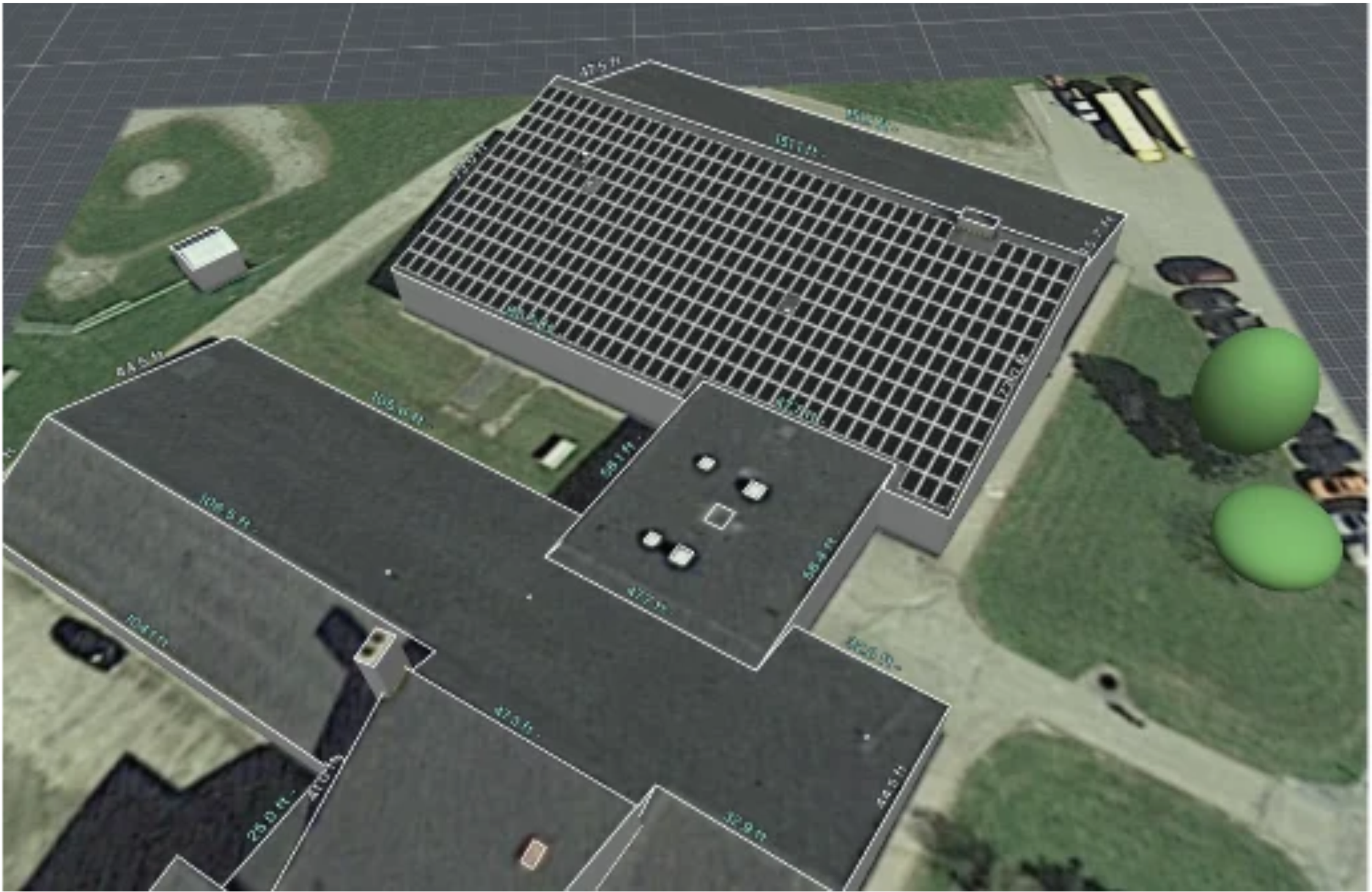
When operational, the solar will produce roughly 240,00 KWH of clean energy a year, enough to power about three dozen Vermont homes, or one big Valley Hub!
The project will be “grid tied” meaning that extra power we generate will go back onto the grid and help power homes and businesses (including the elementary school) in our community.
We have applied for an interconnection permit already, and are working with Green Mountain Power on renovations to size transformers and the local substation for the benefit of all valley residents.
FAQs
How do solar panels work?
A solar panel works by capturing energy from sunlight and converting it to direct current (DC) electricity. A solar inverter then converts the DC power into Alternating Current (AC), which is what your home uses. Solar energy created this way can be used to power your home, stored in batteries for later use, or sent out to the grid. You get credit for all the electricity your system sends to the grid. You can use this credit to offset your electric bill.
What is a grid tied solar project?
Grid-tied power systems are connected to the main power grid. When our photovoltaic system produces electricity, the power is first used to satisfy the building’s electricity needs at that time - the electrons we make power the programs and businesses in our building first. Excess electricity produced by our project is sent to the grid and we get utility credits on our bill.
Why add solar now?
A solar system effectively locks in our power cost for the next 30 years. Solar brings certainty, while also cutting pollution and global warming emissions and reducing our heating bill overall. Like all vermonters, we’ve seen continually rising utility rates and unpredictable price spikes in heating costs. Adding the solar as part of phase 1 renovations helps us stabilize costs and provides peace of mind. It also fits with Valley Hub’s goal of building a sustainable, environmentally friendly community center in the heart of our valley.
What about snow and weather?
Solar energy systems produce more power on sunny days, and less when it is cloudy. They produce no power at night. This is factored into the projections above and mean that we’ll generate about as much electricity in a year as we use inside the building - on average, over the course of 365 days. Snowy days are cloudy days, so our system will produce less electricity in the winter. The panels are tilted so that in most cases, snow slides right off, just like it will off our new metal roof. Occasionally, snow will build up over panels, and they will produce no power until it melts or slides off in a few days. But it’s important to remember that even with these occasional solar blockages, our system will still provide significant amounts of power and save us money over time.
How can the town or VHI qualify for a tax credit when you don’t pay taxes?
Elective Pay or Direct Pay allows tax-exempt and government entities to claim federal clean energy tax credits. Since these kinds of entities don’t owe U.S. federal income taxes, they receive the credit in the form of a cash refund from the IRS. Entities, including cities, public utilities, houses of worship, and community-based nonprofits, can receive cash for building geothermal, solar, wind, energy storage, and other eligible clean energy projects. Elective Pay helps communities reduce energy costs, create high-quality jobs, and expand public clean energy. Enacted on August 16, 2022, the Inflation Reduction Act expanded access to Elective Pay for tax credits and incentives related to energy generating projects, including solar. For more information see: https://www.lawyersforgoodgovernment.org/elective-pay-101
Didn't the tax credits for solar expire?
Enacted on July 4, 2025, the “One Big Beautiful Bill Act (OBBBA)”, phased out many of the clean energy tax credits and adds new burdensome rules, but left the Elective Pay program intact. Also important, projects that make a qualifying “safe harbor” investment before July 4, 2026, and/or complete their projects before the end of 2027 can still qualify for the Inflation Reduction Act’s elective pay program for solar and other clean energy projects. For more information see https://www.lawyersforgoodgovernment.org/how-much-time-do-i-have-left-to-claim-the-clean-energy-tax-credits